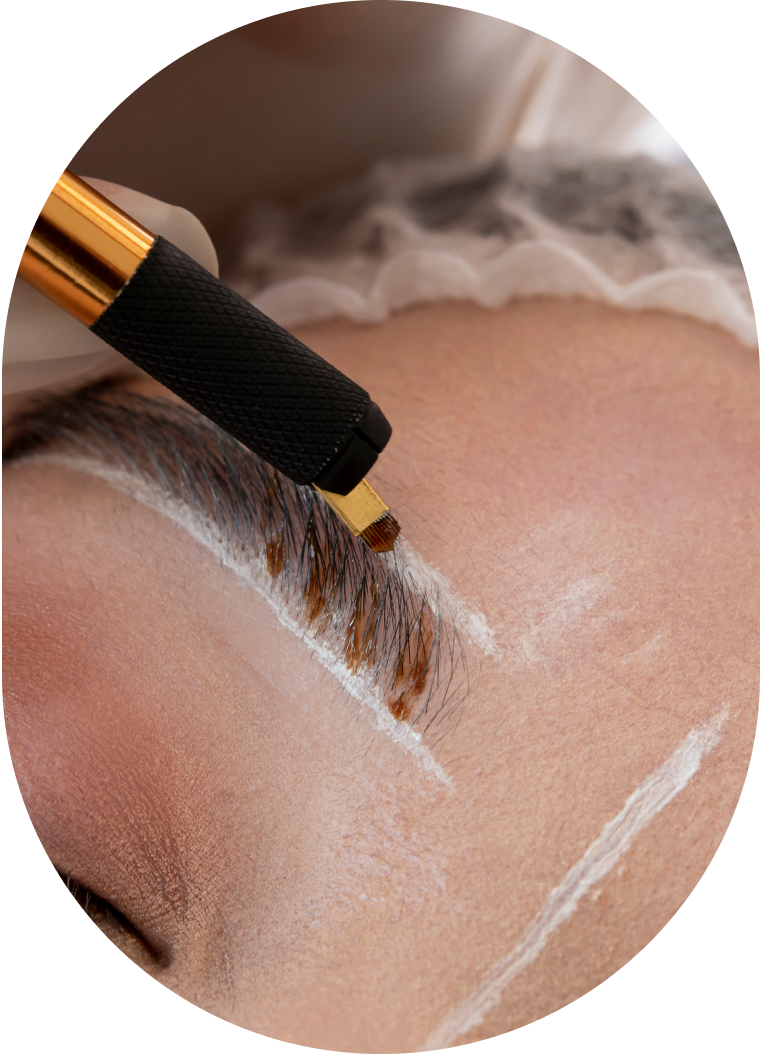


A milium, also known as a whitehead, is a small, hard white bump under the skin. Milia are often seen around the eyes, but can also appear on other areas of the face. These microcysts are filled with keratin, a natural protein found in our skin. Although they are completely harmless, these small white spots can affect the appearance of the skin. They do not hurt, but can cause uneven texture.
This treatment may not be suitable for certain darker or recently tanned skin tones and must be assessed during consultation.
This treatment may not be suitable for certain darker or recently tanned skin tones and must be assessed during consultation.


A milium forms when dead skin cells are not properly eliminated. They remain trapped beneath the surface, forming these small white bumps. Several factors can contribute to the appearance of milia:
In summary, milia on your face are not just a cosmetic concern; they’re also a sign that your skin needs a boost with a more suitable routine.


Subscript
Milia are often mistaken for acne pimples, but their nature is very different. A milium contains keratin trapped under the skin, which makes it impossible to squeeze out like a regular pimple. Trying to remove it yourself, especially near the eyes, can leave scars or cause irritation. The presence of these microcysts indicates that the skin is not properly renewing its surface cells. Our professionals assess each lesion before safely removing it with electrocoagulation.
Trying to remove milia yourself, by piercing or squeezing the area, can cause scarring, infection and hyperpigmentation, especially on the thin skin around the eyes. The closed structure of the microcyst makes this ineffective without the right instrument. Milia around the eyes or on other areas of the face require an assessment by the medical aesthetics clinic’s professionals, who determine the removal technique best suited to your skin type.
This treatment may not be suitable for certain darker or recently tanned skin tones and must be assessed during consultation.
The treatment we recommend most for removing milia is electrocoagulation. This gentle, non-invasive technique uses a very fine heated needle to target and remove the cyst without damaging the surrounding skin. The result: a quick, precise and long-lasting treatment with minimal risk of scarring.
To strengthen the results of the treatment and prevent new whiteheads from appearing on the skin, we recommend:
With a gentle approach, adult milia can be treated without irritation, while respecting the skin.
Milia on the face are common, but you don’t have to live with them. With a suitable professional treatment, you can get clearer, softer and more radiant skin. If you notice whiteheads on your skin, don’t wait: a professional can help you remove them quickly and safely.
We also specialize in treating milia under the eyes using safe and clinically tested methods adapted to this sensitive area, minimizing risks and ensuring your skin’s natural glow.
Book your personalized consultation today!
This treatment may not be suitable for certain darker or recently tanned skin tones and must be assessed during consultation.
Facial milia can indeed disappear on their own, especially in people whose skin has a very strong capacity for regeneration. The process can take time, from a few months to longer depending on the individual. A milium, the small white bump formed by keratin built up under the skin, can stay in place if nothing is done. Although harmless, it disrupts the harmony of the face in particular. For those who want a smooth, even look more quickly, it makes sense to turn to a health professional. At a dermatologist’s office or an aesthetic clinic, milia extraction is performed to remove these white bumps from the face while limiting the risk of scarring or irritation.
Preventing milia and limiting their appearance comes down to adopting a suitable skincare routine. It is important to use light, non-comedogenic products to avoid milia, which are mainly caused by keratin building up under the skin. Protecting your skin from UV rays with a suitable sunscreen also helps limit the risk of whiteheads appearing. Gentle but regular cleansing helps remove impurities and keep the skin barrier healthy. These simple habits are essential to avoid white bumps on the face and keep your skin looking its best. For the best results, see a professional if needed.
The skin around the eyes is particularly thin and delicate, making it more prone to milia formation due to its fine structure, which favors keratin accumulation and the development of tiny white bumps that are difficult to remove without professional help. Applying overly rich creams that are unsuitable for this sensitive area can also trigger white bumps on the face. Milia on the eyelids require special care to avoid damaging such thin skin. A proper under-eye milia treatment performed by a professional ensures safe removal while preserving the youthfulness of the eye area.
Milia can sometimes resolve on their own, particularly in newborns and young children, whose skin renews itself quickly. In adults, however, the keratin trapped beneath the surface tends to persist because the skin cannot expel it naturally through exfoliation. When spontaneous resolution does happen, it can take several months. For persistent milia, especially on the eyelids and around the eyes, an assessment by our professionals helps determine the safest and most suitable removal approach.
Although extraction kits and pharmacy products are available, removing milia at home without professional training carries a real risk of scarring, infection and skin irritation. This warning is especially important for the area around the eyes, where the skin is very thin and sensitive. Unlike acne, which can sometimes respond to topical treatments, milia require precise removal of the keratin capsule. An in-clinic assessment allows for targeted, safe removal suited to the area concerned and your skin type.
Self-extraction of milia is not recommended. Piercing or squeezing a closed microcyst without a sterile instrument carries real risks: scarring, infection and hyperpigmentation, especially on the thin skin around the eyes. Creams and extracts sold in pharmacies are not very effective against the closed structure of these cysts. A consultation at a medical aesthetics clinic allows for safe removal adapted to the location and skin type.
The skin around the eyes is particularly thin and delicate, which encourages keratin to build up under its surface when cell renewal slows down. Using skincare products that are too rich or unsuitable for this sensitive area makes this worse. Because this location requires a precise removal technique to preserve the integrity of the eyelid skin, a personalized in-clinic assessment helps determine the most appropriate approach.
(Note: several of these FAQs overlap on the live page: two on whether milia go away on their own, two on removing them at home, and two on why they appear around the eyes.)
In the emergence of non-surgical aesthetic care, the Main d’Or clinic was founded by Mirna Saadé, a nurse clinician, with a mission to offer injectable aesthetic care and skin care where safety and efficacy are the priorities.
With the emergence of non-surgical aesthetic treatments, Clinique Main d'Or was founded by Mirna Saadé, a clinical nurse, with the mission of offering injectable aesthetic treatments and skin care where safety and effectiveness are the priorities.